When a Luxury House Entered the Streets
For decades, luxury fashion and streetwear existed in two distinct orbits. While high-end houses occasionally “borrowed” from urban culture, there was always a clear hierarchy. Then came 2019.
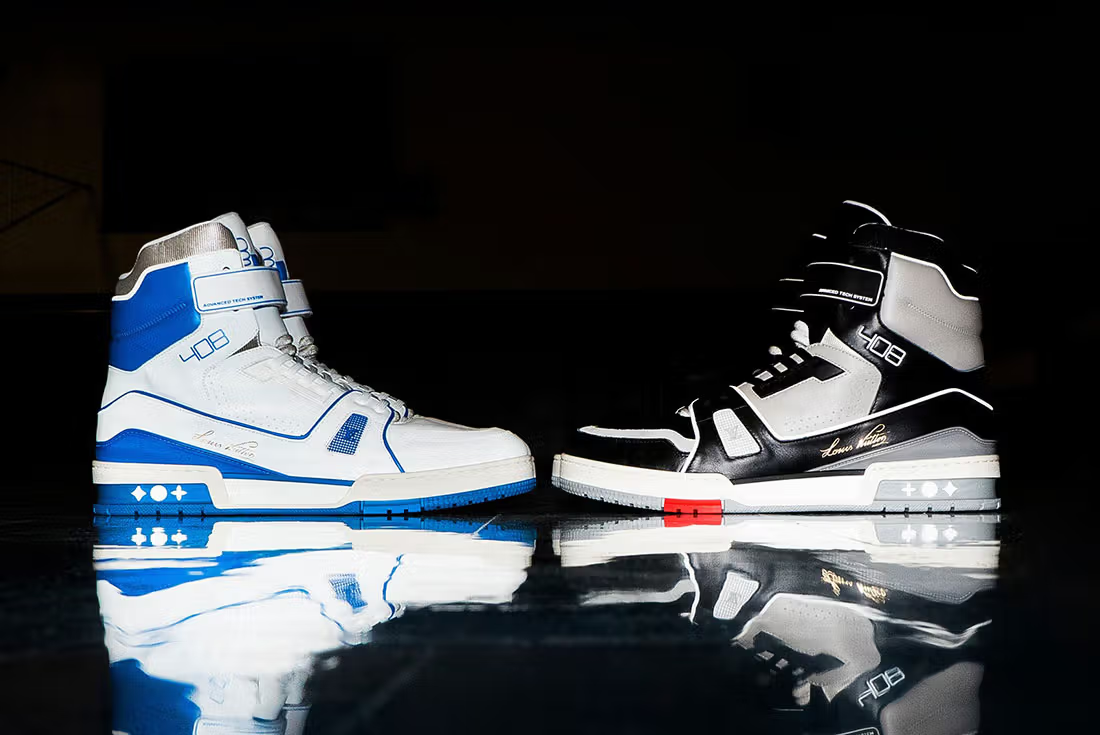
Before this shift, luxury sneakers were often minimalist, peripheral, and safe. They were products designed to accompany a suit, not to lead a movement. The arrival of the Louis Vuitton Trainer changed the physics of fashion. It was the moment luxury stopped observing streetwear from a distance and started defining its future.
This isn’t just a product history; it is a cultural timeline of how a single silhouette transformed the world’s most famous leather goods house into the epicenter of global sneaker culture.
Before the Trainers: Louis Vuitton’s Relationship With Footwear
To understand the impact of the LV Trainer, one must understand the “Maison” that preceded it. Louis Vuitton’s heritage was built on the art of travel—trunks, formal leather goods, and a rigid commitment to traditional craftsmanship.
For over a century, footwear at LV meant formal loafers, boots, and dress shoes. Sneakers were viewed as a risk, a casual commodity that sat outside the brand’s core identity of timeless elegance. Entering the sneaker world seriously wasn’t just a design choice—it was a high-stakes gamble on the brand’s relevance to a new generation.
2019: The Virgil Abloh Reset
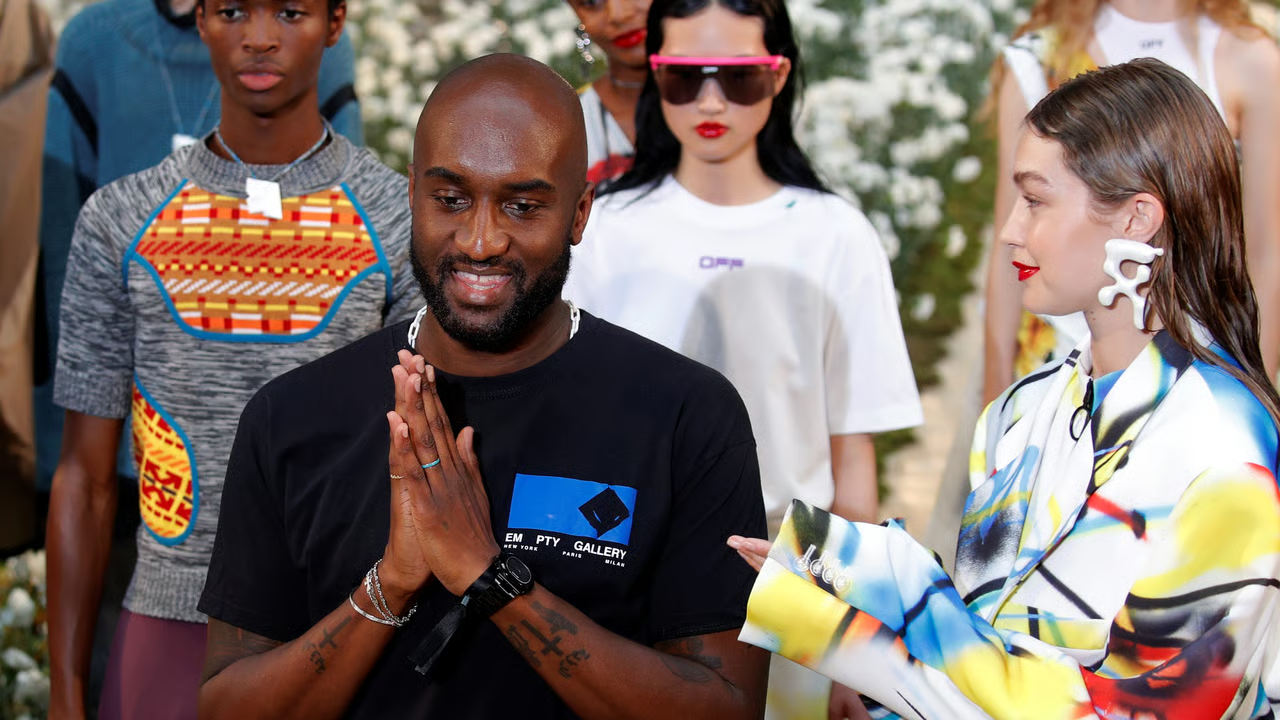
In June 2018, the fashion world held its breath as Virgil Abloh debuted his first collection for Louis Vuitton. By the time the pieces hit the shelves in 2019, the landscape had shifted forever.
Why Virgil Abloh Didn’t “Design Sneakers” — He Reframed Them
Abloh’s philosophy was never about just creating a new silhouette; it was about symbolism over aesthetics. He treated the sneaker as a language. By blending 1990s basketball nostalgia—specifically cues from the vintage heavy-hitters of the hardwood—with the savoir-faire of Italian shoemaking, he created a bridge.
The original LV Trainer wasn’t meant to be subtle. It was a loud, unapologetic statement that the “Quiet Luxury” of the past could coexist with the vibrant, expressive energy of 90s skate and hoops culture.
Anatomy of the Original Louis Vuitton Trainer
What makes an LV Trainer an industry standard? It lies in the meticulous dissection of its design. Each pair requires approximately seven hours of stitching, a testament to its “luxury-first” construction.

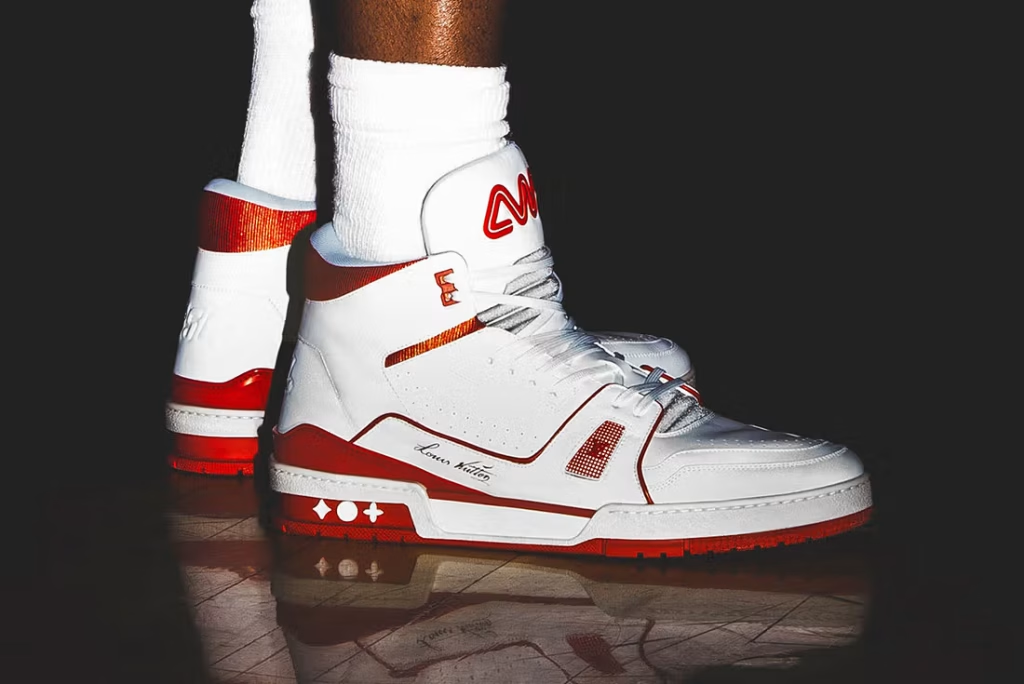
- The Silhouette: Inspired by vintage basketball footwear, the high-top and low-top versions utilized a bulky, padded tongue and collar, reminiscent of the 1980s.
- The Sole: An innovative, multi-part injected sole that offered the comfort of a sports shoe with the weight and substance of a luxury boot.
- Material Mixing: Abloh pioneered the use of LV’s iconic Monogram denim and grained calf leather on a single shoe, proving that “street” fabrics belonged on “luxury” silhouettes.
- Logo Placement Logic: From the “Louis Vuitton” script signature on the side to the Monogram flowers embedded in the sole, the branding was architectural rather than just printed.
From Runway to Reality: How LV Trainers Entered the Real World
The transition from the runway to the sidewalk was instantaneous. Validated by celebrity early-adopters and the inner circle of the streetwear elite, the LV Trainer became a form of cultural currency.

Scarcity fueled the fire. By releasing limited colorways and regional exclusives, Louis Vuitton adopted the “drop” model of streetwear giants, making the acquisition of a pair as much about the hunt as the purchase. The sneaker was no longer just footwear; it was a membership card to a global cultural movement.
2020–2022: The Era of Expansion
As the silhouette matured, the focus shifted from shock value to design continuity. Between 2020 and 2022, Louis Vuitton expanded the lineup without diluting the icon.
We saw the introduction of the “Upcycling” project, where past materials were repurposed into new designs, and the integration of technical mesh for a more athletic “Run Away” feel. The design stayed consistent, but the narrative evolved to include sustainability and technical innovation, ensuring the LV Trainer remained the “everyday” luxury choice for the global traveler.
Post-Abloh: What Changed and What Didn’t
Following Virgil Abloh’s passing, many wondered if the momentum would stall. Instead, the brand doubled down on his foundation.

The silhouette logic remained sacred—the bulky, nostalgic frame stayed intact. However, the brand evolved toward stylistic versatility. Post-2023 designs moved toward more refined palettes, allowing the trainers to transition seamlessly from a streetwear fit to a tailored, contemporary look. The LV Trainer proved it wasn’t a trend; it was a new classic.
Why Louis Vuitton Trainers Became a Cultural Icon
The longevity of the LV Trainer boils down to three definitive factors:
They Represented a New Luxury Consumer
The modern luxury buyer is younger, logo-literate, and values culture over traditional status. The LV Trainer spoke their language fluently.
They Bridged Fashion Worlds
They are the only shoes that look equally at home courtside at an NBA game as they do in the front row of a Paris Fashion Week show. They successfully merged the “High” and the “Low.”
They Redefined What a Luxury Sneaker Could Be
Unlike the “sock sneakers” or minimalist white trainers of the previous era, the LV Trainer was symbolic. It carried the weight of history and the energy of the future in one stride.
2026 and Beyond: The Future of LV Trainers
As we stand in 2026, the LV Trainer has achieved the rarest status in fashion: timelessness. It is no longer “trendy” because it has become a structural part of the modern wardrobe.

In an era of capsule wardrobes and investment-grade fashion, these trainers are viewed as heritage pieces. They are the “Speedy bag” of footwear—a design that will be as relevant ten years from now as it was at its 2019 debut. Their longevity is rooted in their ability to adapt to the wearer’s lifestyle, whether as a collector’s item or a daily staple.
Inspired Design and the Spread of an Icon
At HolloStyle, we recognize that true icons always influence the wider fashion ecosystem. The DNA of the LV Trainer can be seen across the industry, inspiring a shift toward more substantial, character-driven footwear. This spread isn’t just about imitation; it’s about the celebration of a design language that changed how we walk through the world. We believe in documenting this evolution with the respect and transparency that modern luxury deserves.
Conclusion: When Sneakers Become History

The story of the Louis Vuitton Trainer is a reminder that luxury is not static. It is a living, breathing dialogue between heritage and the streets. These sneakers are now a permanent chapter in fashion history—a symbol of a time when the world’s greatest luxury house decided to play ball.
At HolloStyle, we document modern luxury as it evolves—not after it fades.
FAQ: The Louis Vuitton Trainer Legacy
When were Louis Vuitton trainers first released? The modern era of LV trainers, specifically the iconic “LV Trainer” silhouette, was debuted by Virgil Abloh during his Spring/Summer 2019 show.
Why are LV trainers so popular? Their popularity stems from their unique blend of 90s basketball nostalgia, high-end Italian craftsmanship, and the cultural endorsement of the world’s leading style icons.
Did Virgil Abloh design Louis Vuitton trainers? Yes, Virgil Abloh was the visionary behind the LV Trainer, reimagining the brand’s footwear identity and creating the blueprint for the current collection.
Are LV trainers still relevant in 2026? Absolutely. In 2026, the LV Trainer is considered a “modern classic.” It has transitioned from a hyped release to a staple investment piece for style-conscious individuals worldwide.
2 responses to “The Complete History of Louis Vuitton Trainers: From Virgil Abloh’s Vision to Cultural Icon (2019–2026)”
[…] use of the Monogram flower on the side and the oversized LV logo on the tongue is a form of cultural confidence. It isn’t hiding; it’s announcing its presence as the new standard of the […]
[…] Trainer (LV-only): A Louis Vuitton house silhouette designed under Virgil Abloh’s LV era—built with LV design language and released as part of LV’s sneaker […]